
We live in one of the sunniest countries in the world, so it's easy to assume vitamin D is the one thing South Africans don't need to think about. It's one of the questions I'm asked most, and the answer surprises people every time.
Vitamin D isn't really "just a vitamin". It works more like a hormone, a messenger that tells your body how to use calcium, keeps your muscles strong and helps your immune system do its job. And plenty of us, adults and children, don't have as much of it as we think.
So let's go through the whole thing in plain language: what vitamin D is, how your body makes it, what it does, why so many of us still run low, and what parents need to know for babies and children.
What vitamin D actually is
Most vitamins have to come from food. Vitamin D is different, because your body can make it itself when sunlight touches your skin. That's why it's called the sunshine vitamin.
The vitamin D you make or eat isn't active yet. Your body has to convert it twice before it can use it. Once it's switched on, it behaves like a hormone: it travels in your blood and gives instructions to cells all over your body, from your gut and bones to your muscles and immune cells.1
How your body makes it: from sunlight to active vitamin D
Your body goes through four main stages to turn vitamin D from sunlight or food into its active form.
| ❶ | Skin
When UVB rays from the sun reach your skin, a form of cholesterol in the skin is turned into vitamin D3. Vitamin D from food and supplements joins in from your gut. |
| ❷ | Liver
Your liver converts it into 25-hydroxyvitamin D, or 25(OH)D. This is the storage form, and it's what a blood test measures. |
| ❸ | Kidneys
When your body needs it, your kidneys convert the storage form into the active hormone, calcitriol. |
| ❹ | Your whole body
Active vitamin D tells your gut to absorb calcium and phosphate, and works with cells in your bones, muscles and immune system. |
One detail I love: magnesium helps the enzymes that activate vitamin D. If you're low in magnesium, your body may struggle to use the vitamin D you have.12 (More on that in Not All Magnesium Is the Same.)
What vitamin D does for you
Calcium and strong bones. This is its best-known job. Without enough vitamin D, your gut absorbs only a small share of the calcium you eat, no matter how much milk or maas you drink. Your body then takes calcium from your bones to keep your blood levels steady. Over time that leaves bones softer and weaker. In children this shows up as rickets; in adults it's called osteomalacia, and it adds to the risk of osteoporosis later in life.1,2
Muscles. Your muscles have vitamin D receptors too. Very low levels are linked with muscle weakness and aches, and in older adults with a higher risk of falls.2
Your immune system. Vitamin D supports the normal function of your immune system. A large review of 25 trials found that daily or weekly vitamin D modestly reduced the risk of chest and throat infections such as colds and flu, with the clearest benefit in people who were very low to begin with.7 It isn't a shield against every winter bug, but being low can leave your defences under-supported.
Mood. The brain has vitamin D receptors, and people with low levels are more likely to report low mood. I'll be honest, though: large trials in people who weren't deficient didn't show that vitamin D lifts mood on its own.8 Think of it as one piece of the picture, alongside sleep, movement, daylight and good food.
Signs you may be running low
Low vitamin D is often silent. Many people have no signs at all until it has been low for a long time. When signs do appear, they can include:
- tiredness that doesn't lift with rest
- aching bones, especially in the lower back, hips or legs
- muscle weakness or cramps
- picking up one cold after another
- low mood, especially in winter
All of these can have other causes, so treat them as a reason to get tested, not as a diagnosis.
Who is more likely to be low?
- People who spend most of the day indoors: office workers, night-shift workers and people who are housebound.
- People with darker skin, especially in winter.
- People who cover most of their skin outdoors, for cultural, religious or comfort reasons.
- Adults over 65, because ageing skin makes less vitamin D.4
- Pregnant and breastfeeding women.
- Breastfed babies (more on this below).
- People living with obesity, because vitamin D gets stored in body fat and less of it circulates in the blood.1
- People with conditions that affect absorption, such as coeliac disease or Crohn's disease, or with liver or kidney disease.
- People on certain long-term medicines, such as some epilepsy medicines, steroids and some HIV medicines.1
Why low vitamin D is common in sunny South Africa
Sunshine and vitamin D aren't the same thing. Your skin needs UVB rays on bare skin, and several things get in the way.
We live indoors. Most of us move from house to car to office to shop. Glass blocks UVB, so sitting in a sunny window or car doesn't count.
Winter is weaker than it looks. In winter the sun sits lower and less UVB reaches the ground, especially further south. In a Cape Town study of healthy young adults of Xhosa and Cape Mixed ancestry, only 4% to 16% had low vitamin D in summer. By winter it was 64% to 70%.3 People also spent less time outside and covered up more against the cold.
Darker skin needs more sun. Melanin is a natural sunscreen. It protects your skin well, but it also means darker skin needs more time in the sun to make the same amount of vitamin D.2,4
Covering up. Long sleeves, headscarves and full-body clothing leave very little skin for the sun to reach.
Sunscreen. In the lab, sunscreen blocks the UVB that makes vitamin D. In real life, studies show normal sunscreen use rarely causes deficiency, because nobody applies it perfectly.9 Please don't skip sunscreen for the sake of vitamin D. Protecting your skin matters more.
Our plates are short of it. Very few everyday South African foods contain much vitamin D, and our staple foods (maize meal and bread flour) aren't fortified with it.4
Across Africa, a review of 129 studies found that about one in three people had vitamin D levels below 50 nmol/L, and average levels in South Africa were lower than in many countries closer to the equator.5
Where to find vitamin D in food
Food alone rarely covers your full needs, but it helps, and these foods are good for you in other ways too.
 |
 |
 |
| Pilchards and sardines | Eggs | Mushrooms |
| Food | Roughly how much vitamin D |
|---|---|
| Oily fish: pilchards, sardines, mackerel, snoek, salmon, trout | The best food source. An 85g portion of salmon or trout gives about 570 to 650 IU. Tinned pilchards and sardines give less but are affordable and easy. |
| Eggs (the yolk) | About 44 IU per egg. |
| Mushrooms left in the sun or labelled "UV-exposed" | Varies a lot. UV-exposed mushrooms can be high. |
| Fortified foods: some margarines, milks, yoghurts and breakfast cereals | Check the label. Fortification is voluntary in South Africa, so the amount differs by brand. |
| Liver and beef | Contain small amounts of vitamin D. |
Source: US National Institutes of Health, Office of Dietary Supplements.1 Amounts are approximate.
An easy week: pilchards on toast twice, eggs most mornings, and mushrooms set in the sun for half an hour before you cook them.
How much vitamin D you need
Vitamin D is measured in international units (IU) or micrograms (µg). One microgram equals 40 IU.
| Age | Recommended a day | Upper limit a day |
|---|---|---|
| 0 to 6 months | 400 IU (10 µg) | 1,000 IU (25 µg) |
| 7 to 12 months | 400 IU (10 µg) | 1,500 IU (38 µg) |
| 1 to 3 years | 600 IU (15 µg) | 2,500 IU (63 µg) |
| 4 to 8 years | 600 IU (15 µg) | 3,000 IU (75 µg) |
| 9 to 70 years, including pregnancy | 600 IU (15 µg) | 4,000 IU (100 µg) |
| 71 years and older | 800 IU (20 µg) | 4,000 IU (100 µg) |
Source: US National Institutes of Health, Office of Dietary Supplements.1 The upper limit is the most you should take a day without medical supervision.
Get tested before you guess
The only way to know your level is a blood test. Ask your doctor for a 25(OH)D test (25-hydroxyvitamin D). Most pathology labs in South Africa offer it. The best time to test is late winter, when levels are usually at their lowest.
|
How to read your result (nmol/L) Below 30: deficient Risk of soft bones. Your doctor will usually recommend a treatment dose. 30 to 50: may be too low Not enough for bone health in some people. 50 and above: adequate for most people Above 125: possibly too high No extra benefit, and a sign to cut back. |
Cut-offs from the US National Institutes of Health.1 Some labs report in ng/mL; divide nmol/L by 2.5 to convert. Your doctor will interpret your result with your health history.
Sensible supplement guidance
- Choose vitamin D3 (cholecalciferol). It raises blood levels more effectively than D2.10
- Take it with a meal that has some fat in it, such as eggs or avocado, because vitamin D is fat-soluble.
- A daily maintenance dose of 600 to 1,000 IU suits most adults who can't get regular sun, unless your doctor advises a different amount.
- If you test low, your doctor may prescribe a higher dose for a set time, then retest. Don't take high doses for months without a follow-up test.
- Count everything. Vitamin D is often in multivitamins, calcium tablets and immune blends. Add them up so you stay under the upper limit.
Yes, too much vitamin D is harmful
Because vitamin D is stored in the body, it can build up. Too much from supplements raises calcium in the blood, which can cause nausea, vomiting, loss of appetite, constant thirst, muscle weakness, confusion, kidney stones and, in severe cases, kidney damage and heart rhythm problems.1 This almost always comes from taking high-dose supplements for a long time. You can't overdose on vitamin D from the sun, because your skin switches off production once you have enough.
Speak to your doctor or pharmacist before you start if you:
- Have kidney disease, liver disease, sarcoidosis or a parathyroid condition, or have had kidney stones.
- Take steroids, epilepsy medicine, weight-loss medicine (orlistat), cholesterol medicine (statins), water pills (thiazide diuretics) or heart medicine (digoxin), because vitamin D can interact with them.1
- Are pregnant or breastfeeding.
Vitamin D and children
Children's bones are growing fast, and they need vitamin D to build them. Here's what every parent should know.
Bones and growth
During childhood and the teenage years, bones lay down most of the calcium they'll hold for life. Vitamin D lets a child's body absorb the calcium it needs to do that. Good vitamin D in childhood helps build the strong bones children carry into adulthood.1
What rickets is
When a child is very low in vitamin D for a long time, their bones don't harden properly. This is called rickets. It can cause bowed legs or knock knees, thickened wrists and ankles, slow growth, late teeth, and late sitting, crawling or walking.2 Rickets can be prevented, and it's still seen in South Africa.4
Breastfed babies
Breast milk is the best food for babies, and the World Health Organization recommends breastfeeding only for the first six months.11 But breast milk naturally contains very little vitamin D, and young babies shouldn't be in direct sun. That leaves a gap.
In a Western Cape study of 744 babies aged 6 to 10 weeks, about 8 in 10 had low vitamin D. Babies who were breastfed or born in winter were more likely to be low.6
For this reason the American Academy of Pediatrics and many other paediatric bodies recommend 400 IU of vitamin D a day for breastfed and partly breastfed babies, starting in the first days of life.13 Babies on infant formula usually get vitamin D from the formula. This doesn't mean breastfeeding is lacking. It simply fills one gap. Ask your paediatrician or clinic sister at your baby's first check-up.
Safe sun for children
- Babies under 6 months: keep them out of direct sun. Use shade, a hat and light clothing.
- Older children: outdoor play in the early morning or late afternoon is the sweet spot, when the sun is gentler.
- Between 10:00 and 15:00: use shade, a wide-brimmed hat and sunscreen (SPF 30 or higher), as CANSA advises.14 Sunburn is never worth it.
- Food helps too: eggs, oily fish such as pilchards (mash them into a sandwich or with pap), and fortified milk or yoghurt.
When to talk to your paediatrician
- Your baby is breastfed and hasn't been offered vitamin D drops.
- Your child's legs look bowed or their wrists look thickened.
- They're slow to walk, their teeth are late, or their growth has slowed.
- They complain of bone pain or seem weaker than usual.
- They spend very little time outdoors, have darker skin and live somewhere with cold winters, or are mostly covered when outside.
- They have a condition that affects how they absorb food, or take long-term medicine.
- Before giving any vitamin D supplement, check with a healthcare professional so the dose is right for their age and weight.
Children's upper limits are lower than adults' (see the table above), so never give a child an adult dose.
Lisa's picks for vitamin D
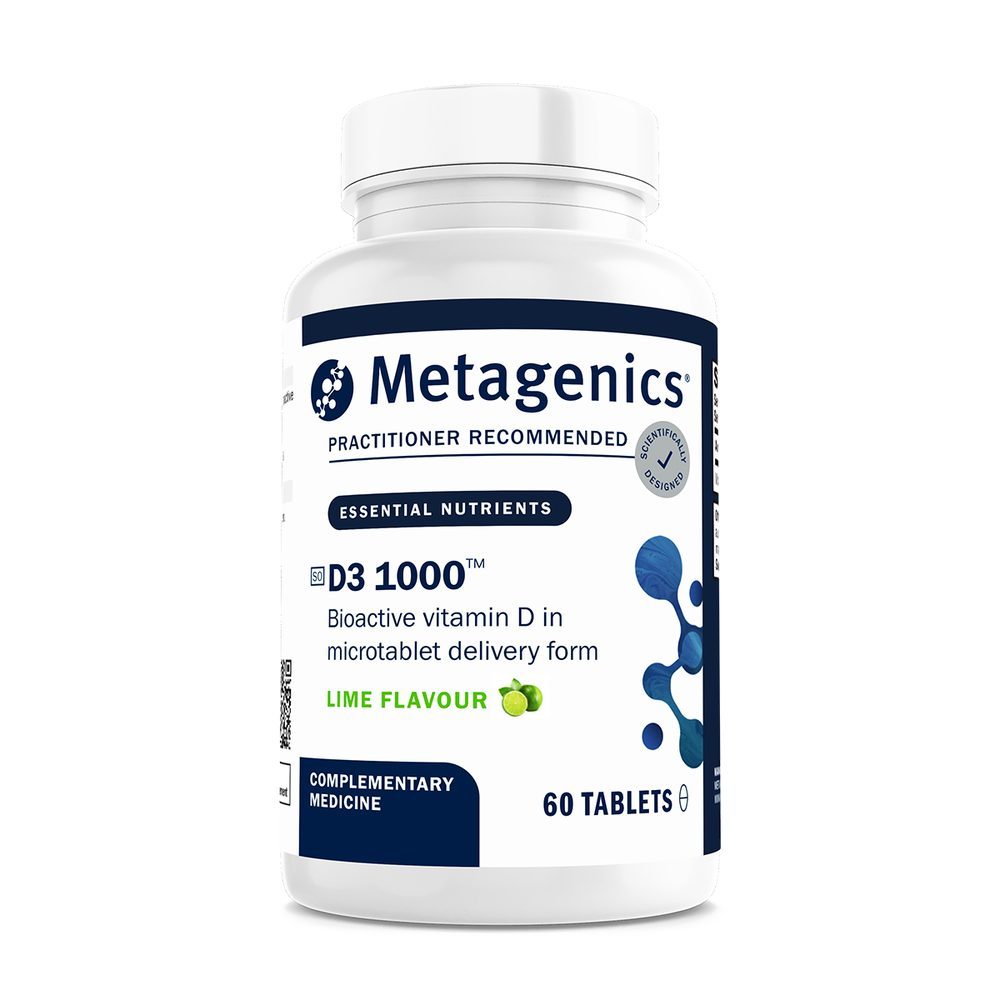 |
LISA'S PICK Metagenics D3 1000For adults · 60 tablets · R260 The one I keep in my own cupboard through winter is Metagenics D3 1000. Each tablet gives 1,000 IU (25 µg) of vitamin D3, which sits comfortably within the adult upper limit. You can chew or swallow it, and one a day with food means a bottle lasts two months, about R4.30 a day. There's also a 120-tablet size for R435. If you prefer drops, D3 Liquid (20 ml, R320) gives the same 1,000 IU in a single drop. If you're already low, test first and ask your doctor about the right dose for you. |
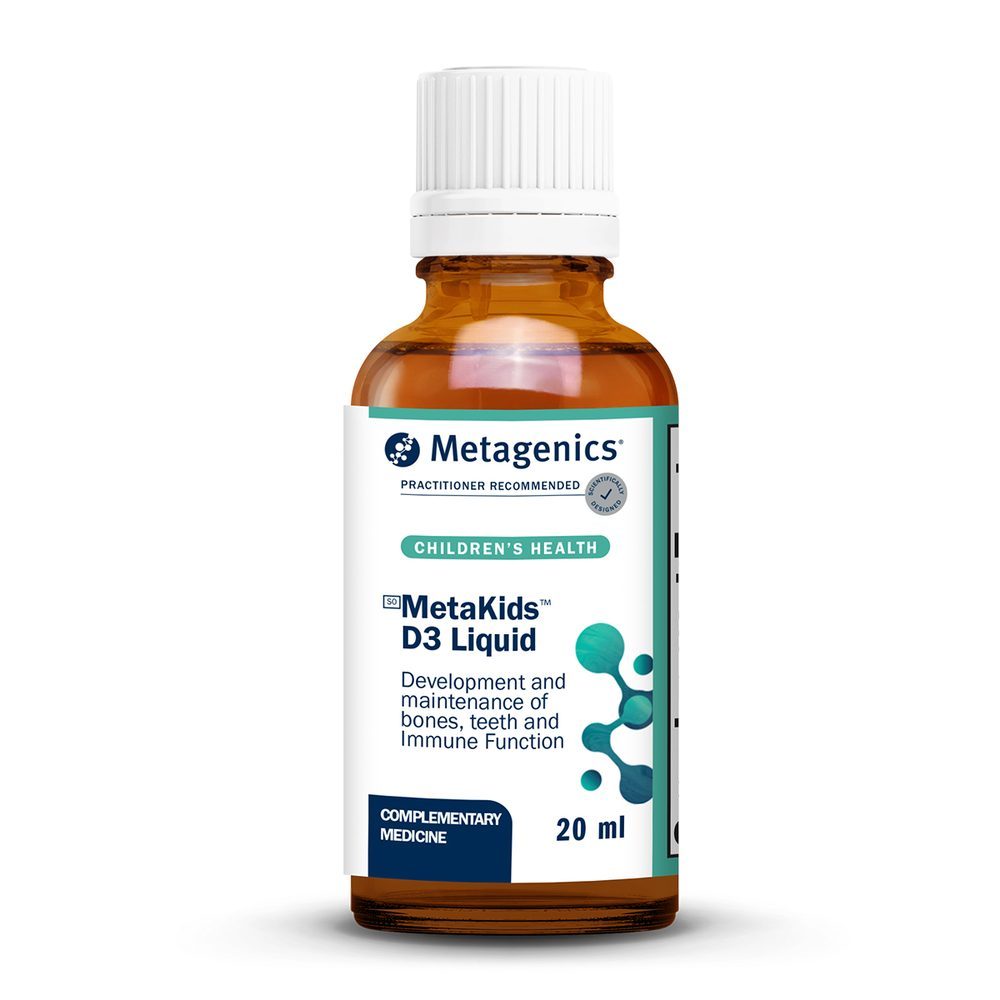 |
LISA'S PICK MetaKids D3 LiquidFor children aged 1 and older · 20 ml · R320 If your paediatrician suggests a vitamin D supplement for your child, MetaKids D3 Liquid is one option to discuss. One drop gives 1,000 IU (25 µg) of vitamin D3. It's a single drop, so it's easy to add to a spoon of food or give straight from the dropper. It isn't made for babies under 12 months. For a baby, ask your paediatrician or clinic sister about an infant vitamin D drop and the right dose. |
|
Try this week Look at your week and count how much time you spend outside in daylight with your arms or legs uncovered. Then check the labels of any supplements you already take for vitamin D. If you've never had your level tested, ask for a 25(OH)D test at your next doctor's visit. Then tell me what you found. I'd love to know. |
With love,
Lisa Chime
Founder of Jannis Health
This article is general information, not medical advice. Speak to your doctor, pharmacist or paediatrician before starting a supplement, especially for a baby or child, or if you are pregnant, breastfeeding, on medication or managing a health condition.
Frequently asked questions
Can you get enough vitamin D from the sun in South Africa?
Many people can in summer, but not everyone and not all year. Winter, time indoors, covering up and darker skin all reduce how much vitamin D your skin makes. In a Cape Town study, most healthy young adults had low levels by the end of winter.
How much vitamin D do I need a day?
The NIH recommends 400 IU a day for babies under 12 months, 600 IU for children and adults up to 70, and 800 IU from age 71. If a blood test shows you're low, your doctor may suggest more for a while.
Is vitamin D3 better than D2?
Both work, but research shows D3 raises blood levels more effectively, which is why most supplements use D3 (cholecalciferol).
Can you take too much vitamin D?
Yes. Too much from supplements can raise calcium in the blood and cause nausea, weakness, confusion and kidney problems. For adults and children 9 and older, the upper limit is 4,000 IU a day unless your doctor advises otherwise. You can't overdose from the sun.
Do breastfed babies need vitamin D drops?
Breast milk is the best food for babies, but it naturally contains little vitamin D. Many paediatric bodies recommend 400 IU of vitamin D a day for breastfed babies from soon after birth. Ask your paediatrician or clinic sister what's right for your baby.
References
- National Institutes of Health, Office of Dietary Supplements. Vitamin D: Fact Sheet for Health Professionals. Updated 2024.
- Holick MF. Vitamin D deficiency. New England Journal of Medicine. 2007;357(3):266–281.
- Coussens AK, Naude CE, Goliath R, Chaplin G, Wilkinson RJ, Jablonski NG. High-dose vitamin D3 reduces deficiency caused by low UVB exposure and limits HIV-1 replication in urban Southern Africans. PNAS. 2015;112(26):8052–8057.
- Norval M, Coussens AK, Wilkinson RJ, Bornman L, Lucas RM, Wright CY. Vitamin D status and its consequences for health in South Africa. International Journal of Environmental Research and Public Health. 2016;13(10):1019.
- Mogire RM, Mutua A, Kimita W, et al. Prevalence of vitamin D deficiency in Africa: a systematic review and meta-analysis. Lancet Global Health. 2020;8(1):e134–e142.
- Ncayiyana JR, Martinez L, Goddard E, Myer L, Zar HJ. Prevalence and correlates of vitamin D deficiency among young South African infants: a birth cohort study. Nutrients. 2021;13(5):1500.
- Martineau AR, Jolliffe DA, Hooper RL, et al. Vitamin D supplementation to prevent acute respiratory tract infections: systematic review and meta-analysis of individual participant data. BMJ. 2017;356:i6583.
- Okereke OI, Reynolds CF, Mischoulon D, et al. Effect of long-term vitamin D3 supplementation vs placebo on risk of depression or clinically relevant depressive symptoms (VITAL-DEP). JAMA. 2020;324(5):471–480.
- Neale RE, Khan SR, Lucas RM, Waterhouse M, Whiteman DC, Olsen CM. The effect of sunscreen on vitamin D: a review. British Journal of Dermatology. 2019;181(5):907–915.
- Tripkovic L, Lambert H, Hart K, et al. Comparison of vitamin D2 and vitamin D3 supplementation in raising serum 25-hydroxyvitamin D status: a systematic review and meta-analysis. American Journal of Clinical Nutrition. 2012;95(6):1357–1364.
- World Health Organization. Infant and young child feeding: fact sheet.
- Uwitonze AM, Razzaque MS. Role of magnesium in vitamin D activation and function. Journal of the American Osteopathic Association. 2018;118(3):181–189.
- Wagner CL, Greer FR; American Academy of Pediatrics. Prevention of rickets and vitamin D deficiency in infants, children, and adolescents. Pediatrics. 2008;122(5):1142–1152.
- Cancer Association of South Africa (CANSA). SunSmart guidance.