Metagenics · Vitamins & Minerals
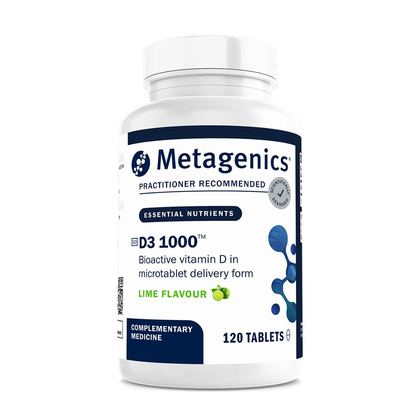
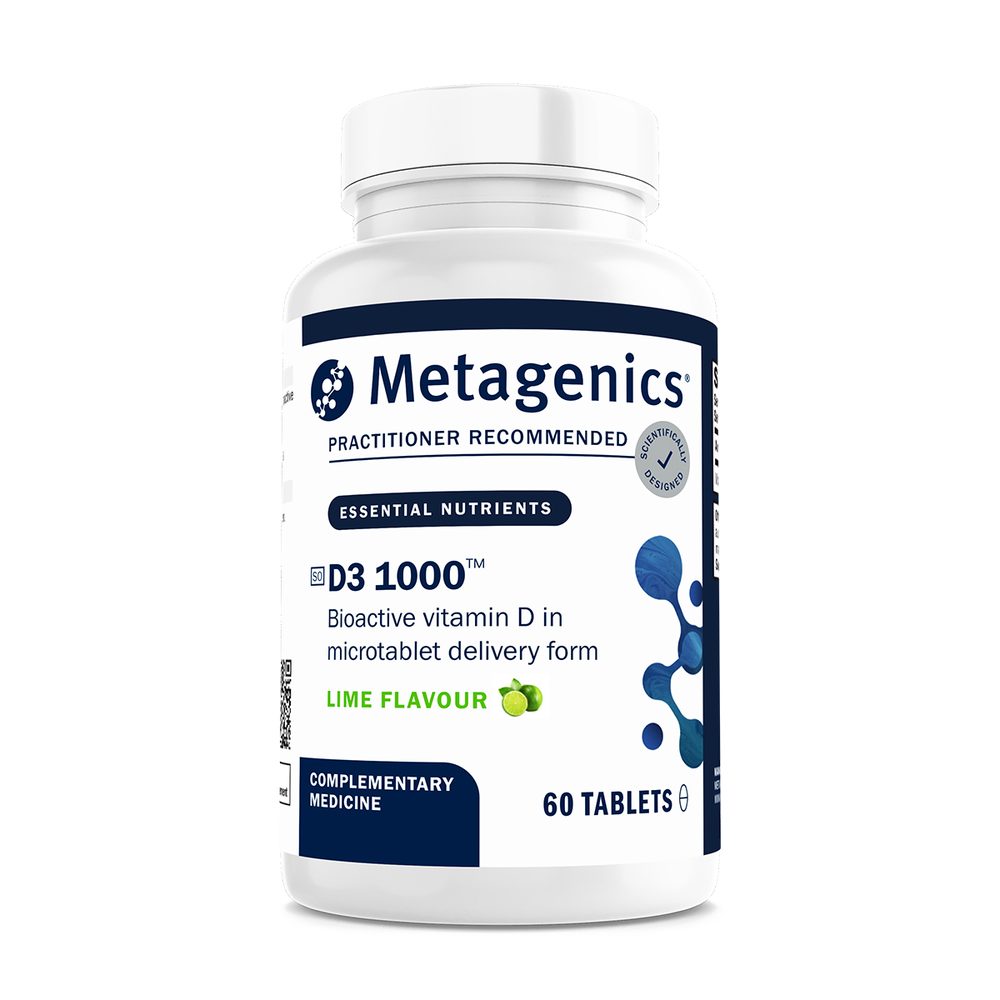
D3 1000 - 60 tablets
R260
D3 1000 features high-potency vitamin D3, the most bioactive form of supplemental vitamin D. It supports healthy bone strength and immune function.
1
Added to your cart.
Third-party tested
Non-GMO
GMP-certified facility
Description
D3 1000 features high-potency vitamin D3, the most bioactive form of supplemental vitamin D. It supports healthy bone strength and immune function. This pro duct is non-GMO, gluten-free and dairy free.
Ingredients
- Vitamin D (as cholecalciferol)25 µg
How to Use
Chew or swallow one tablet daily with food, or as directed by your healthcare practitioner.