
Last week I caught myself standing in the kitchen at 9pm, too tired to sleep. If you're a mother, you know that kind of tired. You've been running since 5am, your shoulders are up near your ears, and when you finally lie down your mind keeps going.
It isn't laziness. Very often it's your body asking for something it's short of. One of the first things I look at is magnesium.
But walk into any pharmacy and you'll see a whole shelf of magnesium at very different prices. Some of it works well. Some of it you'll barely notice. The difference usually comes down to one word on the label.
BOOST PRODUCTIVITY WITH JANNIS HEALTH
What magnesium does for you
Magnesium is involved in more than 300 enzyme processes in the body. It helps your muscles relax after they contract, keeps your nerves firing properly, and plays a part in turning food into energy. It also helps regulate the systems that calm you down at the end of the day.
Your body can't make magnesium, so it has to come from food or supplements. Here is how much adults need each day:
Age group Women Men Ages 19 to 30 310mg 400mg Age 31 and older 320mg 420mg Pregnancy 350 to 360mg — Breastfeeding 310 to 320mg —
Source: US National Institutes of Health, Office of Dietary Supplements.
 What Foods Are Good for Autism | Autism Diet
Why so many of us run low
Three things work against busy women in particular:
- Stress uses it up. When you're under pressure, your body loses more magnesium, mostly through your urine. Low magnesium can in turn make you feel more on edge. Researchers describe this as a vicious circle: stress lowers magnesium, and low magnesium makes stress feel worse.
- Our plates are short of it. The richest sources are pumpkin seeds, nuts, beans, dark leafy greens and whole grains. Refined maize meal, white bread and processed snacks don't contain much.
- Coffee and alcohol don't help. Both can increase how much magnesium you lose, and both get in the way of good sleep. (More on this in How Alcohol Affects Sleep and Will Caffeine Cause Anxiety?)
Common signs that you might be low include muscle cramps or twitching eyelids, tension in your neck and shoulders, poor sleep, and feeling tired but wired. These signs can have many other causes too, so treat them as a reason to look closer, not as a diagnosis.
 Food With Low Calories Is Not Always the Healthiest Choice
The word on the label that matters: the form
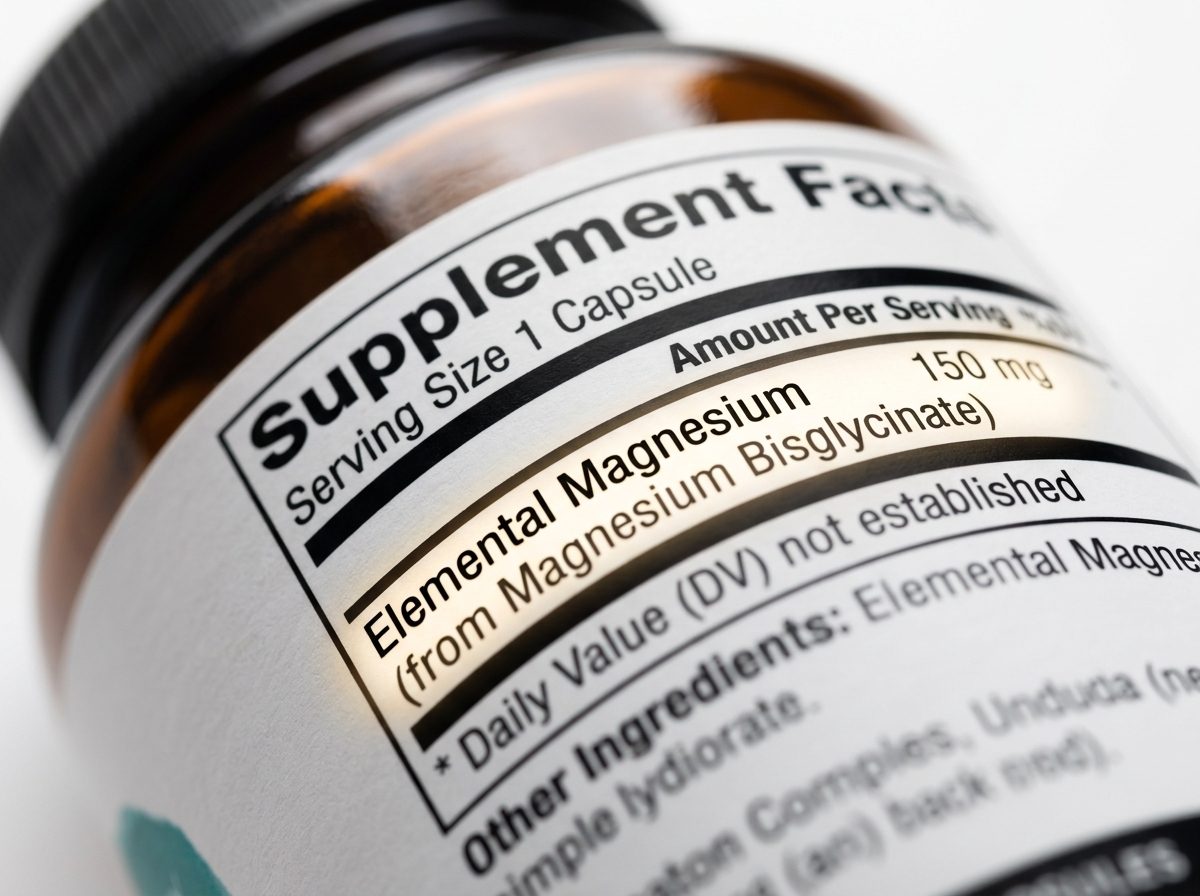
Magnesium on its own is unstable, so supplements always bind it to something else. That partner is called the "form", and it changes how much of the magnesium you actually absorb and how your stomach handles it.
Here are the forms you'll see most often in South African pharmacies:
Form on the label What to expect Magnesium oxide Cheap, and the most common form in budget tablets. It packs a lot of magnesium into a small tablet, but your body absorbs only a small share of it. It often works as a laxative. Magnesium citrate Absorbed well, but it pulls water into the bowel. Useful if you're constipated, less ideal if you have a sensitive stomach. Magnesium bisglycinate (glycinate) Magnesium bound to two molecules of glycine, an amino acid. It's gentle on the stomach, well absorbed and the form I reach for in the evenings. Magnesium taurate Bound to taurine. Often chosen for heart health.
This is why two bottles that both say "magnesium" can feel completely different. If you've tried magnesium before and noticed nothing except an upset stomach, check the form. If it says oxide, that may be the reason. For a fuller comparison of every form, see Which Magnesium Is Best for You?
 Gluten-Free Casein-Free Diet for Autism Spectrum Disorder
How to read the numbers: elemental magnesium
The second thing to check is elemental magnesium: how much actual magnesium you get, not counting the form it's bound to.
Labels can be confusing here. Take the magnesium I use as an example.
Each dose of 2 capsules contains:
1,668mg magnesium bisglycinate
the whole compound, of which
200mg is elemental magnesium
the part that counts towards your daily needs.
If a label only shows the big compound number, it can look far stronger than it is. Look for the line that says "magnesium (as ...)" or "elemental magnesium". That's the number to compare with your daily needs. (Our guide to understanding nutrition labels covers the rest of the label.)
Quick label checklist
- Find the form. Bisglycinate or glycinate for sleep and stress, citrate if you need gentle help with constipation.
- Find the elemental amount per dose.
- Check for anything else mixed in. Some "glycinate" products are partly oxide, because oxide is cheaper.
- Look for third-party testing.
Can magnesium help you sleep?

I'll be honest with you. The research on magnesium and sleep is encouraging but not conclusive. The clearest benefit is for people who are actually low in magnesium, and many of us are. Studies on stress and low mood point the same way: modest benefits, strongest when your levels are low to start with.
What I see in practice is that when magnesium helps, people notice it in their sleep and in their shoulders first. It isn't a sleeping pill and it won't fix four hours of sleep a night. But if you're short of it, topping it up can make winding down noticeably easier.
 Folic Acid vs. Folate | Pregnancy Nutrition Tips for Every Woman
How to take magnesium
- Take it in the evening, with food, if your goal is sleep and calm.
- Start low. One capsule a day for the first week, then two if you need it.
- Stay within the safe limit. For adults, the recommended upper limit from supplements is 350mg of elemental magnesium a day, on top of what you get from food. More than that from supplements is more likely to cause loose stools.
- Give it two to four weeks before you decide whether it's working.
Who should check with a doctor first
Magnesium is safe for most people, but speak to your doctor or pharmacist before you start if:
- you have kidney disease, because your kidneys clear excess magnesium
- you take antibiotics (tetracyclines or quinolones such as ciprofloxacin) or osteoporosis medicine (bisphosphonates). Magnesium can block their absorption, so they need to be taken a few hours apart.
- you take diuretics or long-term heartburn medicine (PPIs), which can change your magnesium levels
- you are pregnant or breastfeeding
 Why Vaccines ǀ What Every African Needs to Know
Food first, always
Supplements fill gaps. They don't replace a good plate. These everyday South African foods give you a magnesium boost:
- Pumpkin seeds: one of the richest sources. A small handful goes a long way.
- Peanuts and peanut butter: choose ones without added sugar.
- Beans and lentils: sugar beans, chickpeas, lentils.
- Dark leafy greens: spinach, morogo, kale.
- Whole grains: oats, brown bread, brown rice.
- Avocado and banana
- Dark chocolate: 70% cocoa or higher, a block or two.
Lisa's pick
Magnesium Bisglycinate

The one I take most evenings is the Viridian High Potency Magnesium Bisglycinate, 60 capsules, R395. It is 100% magnesium bisglycinate with no other forms mixed in, gives you 200mg of elemental magnesium in two capsules, and is third-party tested. At two capsules a day, a bottle lasts a month, which works out to about R13 a day.
If you're running on empty, magnesium is one of four things I keep in my own cupboard. The Tired Mother bundle (R1,943, delivery included) puts all four together: magnesium bisglycinate, a B-complex, ashwagandha and omega-3. If you're pregnant or breastfeeding, there's a separate version made for you.
Shop magnesium Shop the Tired Mother bundle
Try this week
Check the label of any magnesium you already have at home. Find the form and the elemental amount. If it says oxide, that may be why you never noticed a difference.
Then tell me what you found. I'd love to know.
With love,
Lisa Chime
Founder of Jannis Health
This article is general information, not medical advice. Speak to your doctor or pharmacist before starting a supplement, especially if you are pregnant, breastfeeding, on medication or managing a health condition.
 Why Good Nutrition Must Be the Foundation: Power of Discernment and Autism
Frequently Asked Questions
What is magnesium bisglycinate?
It is magnesium bound to two molecules of the amino acid glycine. It is well absorbed, gentle on the stomach and a popular choice for sleep and stress. "Magnesium glycinate" on a label usually means the same thing.
Is magnesium glycinate better than magnesium oxide?
For most people, yes. Oxide contains a lot of magnesium per tablet, but your body absorbs only a small share of it and it often loosens the stools. Glycinate is absorbed better and is easier on the stomach.
When is the best time to take magnesium?
If you're taking it for sleep or to unwind, take it in the evening with food. Otherwise, any time of day with a meal is fine.
How much magnesium should I take?
Most adult women need 310 to 320mg a day from food and supplements combined. The recommended upper limit from supplements alone is 350mg of elemental magnesium a day for adults.
Can I take magnesium every day?
Yes, most healthy adults can take magnesium daily at the recommended dose. Check with your doctor first if you have kidney problems or take prescription medication.