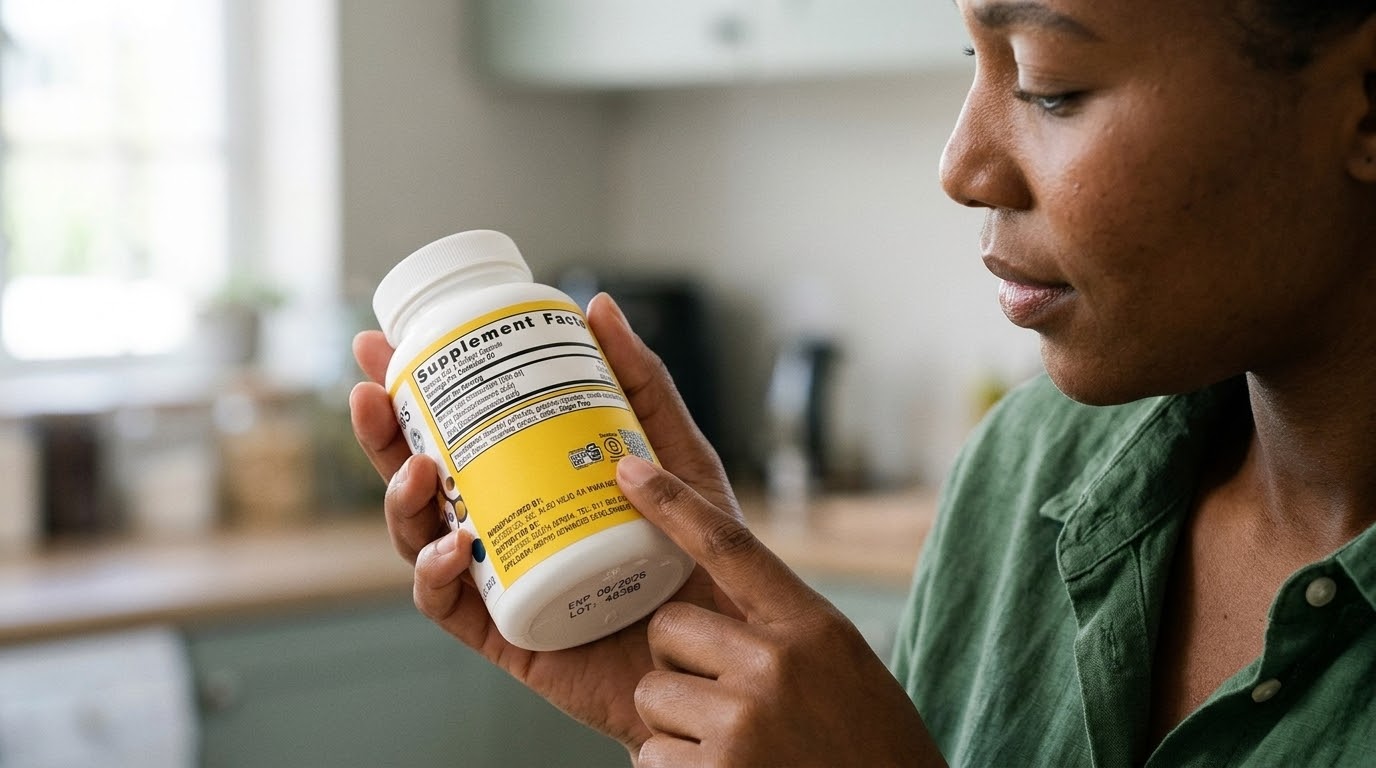
You pick up a supplement bottle at the pharmacy, hoping to improve your health, but the label leaves you confused. Between unfamiliar ingredients, complicated percentages, and bold health claims, choosing the right product can feel like guesswork. Learning how to read supplement labels helps you look beyond attractive packaging and understand what you put into your body. The US Food and Drug Administration (FDA) explains that supplements do not undergo the same pre-market approval process as medicines.
Meanwhile, terms like serving size, daily value, active ingredients, and added fillers can make comparison difficult. You might overlook a high dosage, misunderstand a percentage, or purchase a supplement that duplicates nutrients you already take.
At Jannis Health, we believe better health decisions start with clear information. This guide shows you how to check ingredients, understand dosages, spot misleading claims, and evaluate a supplement label in just 60 seconds.
 Gut Health: Signs, Foods and How to Reset Your Gut
Why Understanding Supplement Labels Matters
Two supplements may promise the same health benefits, yet contain different ingredients, strengths, and recommended doses. Without checking these details, you could spend money on a product that does not meet your needs or accidentally consume more of a nutrient than your body requires.
Learning how to read supplement labels helps you compare products, understand what each serving contains, and identify potential safety concerns.
For example, a multivitamin may already contain vitamin D, while another supplement adds more. Taking both without checking their labels could increase your total intake unnecessarily.
The National Institutes of Health (NIH) explains that some supplements can interact with medicines or cause harmful effects when people consume excessive amounts. Therefore, understanding the label helps you make safer, more informed decisions.
 Mood-Boosting Foods: What to Eat for Emotional Wellness
How to Read Supplement Labels in 60 Seconds
You do not need to understand every scientific term to make sense of a supplement label. Instead, focus on four important details: serving size, active ingredients, daily value percentages, and safety information.
Use this simple 60-second method whenever you compare supplements at a pharmacy or shop online.
| Your 60-second label check |
|
|||||||||||||||
|
||||||||||||||||
| Use this as a quick first check, not a substitute for professional advice when you take medication or have a health condition. | ||||||||||||||||
First 15 Seconds: Check the Serving Size
Start with the serving size, usually near the top of the supplement information panel. This tells you how many tablets, capsules, gummies, or millilitres the manufacturer counts as one serving.
For example, a bottle may advertise 500 mg of calcium, but the label might specify two tablets per serving. Taking one tablet would provide only half that amount.
Also, compare the serving size with the recommended daily instructions. Never assume that one capsule automatically equals one full serving.
 Magnesium for Women: What It Does for You at 30, 40 and 50+
Next 15 Seconds: Review Active Ingredients and Dosages
Look for the nutrients or active substances and the quantity of each ingredient. Labels commonly express these amounts in milligrams (mg), micrograms (mcg or µg), or International Units (IU).
For example:
|
Label information |
What it tells you |
|
Vitamin C – 500 mg |
Each serving provides 500 mg of vitamin C |
|
Vitamin D – 25 µg |
Each serving provides 25 micrograms of vitamin D |
|
Zinc – 15 mg |
Each serving provides 15 mg of zinc |
|
Magnesium – 200 mg |
Each serving provides 200 mg of magnesium |
Illustrative amounts only, not recommended doses.
Remember that a higher dose does not automatically mean better results. Your age, diet, medical history, and existing supplements can influence how much of a nutrient you need.
Next 15 Seconds: Understand Daily Value Percentages
Some supplement labels display a percentage beside each nutrient. This figure shows how much one serving contributes towards a reference daily intake.
For example, a label showing 100% Daily Value (%DV) for vitamin C means one serving supplies the full reference amount under that labelling system.
However, 100% DV does not necessarily match your personal requirements. Different countries may also use different reference values.
The US Food and Drug Administration (FDA) explains that 5% DV or less generally counts as low, while 20% DV or more counts as high. These benchmarks help you interpret US labels, but they do not determine whether a supplement suits your needs.
Final 15 Seconds: Check Other Ingredients and Warnings
Before choosing a product, scan the remaining label for ingredients that may affect your health.
Pay attention to:
- Allergens: Check for ingredients such as soy, milk, or other substances that trigger your allergies.
- Additives: Review sweeteners, colourings, preservatives, and capsule materials when relevant.
- Warnings: Look for precautions involving pregnancy, breastfeeding, medication, or existing health conditions.
- Usage instructions: Follow the manufacturer's directions unless your healthcare professional recommends otherwise.
Also, watch for proprietary blends. Some products list several ingredients under one combined weight without revealing the individual amounts, making it difficult to evaluate each ingredient's dose.
 What Foods Are Good for Autism | Autism Diet
How to Spot Misleading Claims on Supplement Labels
A supplement package might promise stronger immunity, rapid weight loss, or instant energy. Attractive wording can make these claims convincing, but marketing language does not always reflect reliable scientific evidence.
The South African Health Products Regulatory Authority (SAHPRA) oversees the regulation of health products, including applicable complementary medicines, under South Africa's Medicines and Related Substances Act.
When reviewing supplement claims, consider these warning signs:
|
Claim on the label |
What you should consider |
|
"100% natural" |
Natural ingredients can still cause side effects or interact with medicines. |
|
"Guaranteed results" |
Individual responses vary, and responsible health claims should reflect reliable evidence. |
|
"Clinically proven" |
Look for credible research supporting the specific product and claimed benefit. |
|
"Cures multiple diseases" |
Treat broad disease-cure promises as serious warning signs. |
|
"No side effects" |
No supplement can guarantee complete freedom from unwanted effects. |
A product may support normal body functions without treating or curing a medical condition. Therefore, look beyond bold promises and examine the evidence behind each claim.
 Vitamin D: The Sunshine Vitamin Most of Us Don't Understand
What to Look for Before Buying a Supplement
Once you understand the ingredients and claims, take a final moment to check the product's condition, storage requirements, and regulatory details.
These checks matter particularly when buying supplements online, where product photographs may not show every label detail.
Check the Expiry Date and Storage Instructions
Always examine the expiry date before purchasing a supplement. Avoid products with damaged seals, unclear batch numbers, or missing manufacturer information.
Next, read the storage instructions. Some supplements require protection from heat, sunlight, or moisture, while certain products may need refrigeration.
For example, leaving a supplement inside a hot car could expose it to temperatures outside the manufacturer's recommended storage conditions.
Follow the instructions on the packaging to help maintain product quality.
Look for Quality Testing and Regulatory Information
A professional-looking package does not automatically guarantee quality. Check the manufacturer's details, batch number, and any relevant registration or authorisation information.
In South Africa, the Medicines and Related Substances Act 101 of 1965 provides the legal framework for regulating medicines and relevant health products.
Consider these checks before purchasing:
- Regulatory status: Check applicable SAHPRA registration or authorisation details where required. Not every supplement follows the same regulatory pathway.
- Manufacturer details: Look for a traceable company name and contact information.
- Independent testing: Look for credible third-party quality verification, where available.
- Product authenticity: Purchase through reputable pharmacies, established retailers, or verified suppliers.
You can also visit the SAHPRA website for regulatory information and public safety notices.
At Jannis Health, we encourage informed wellness decisions through clear, practical health education. Explore our Health Journal for more guidance on understanding nutrients, supplements, and everyday health choices.
Remember, a supplement should address a genuine nutritional or health need, not simply offer the most impressive packaging or highest advertised dose.
 Folic Acid vs. Folate | Pregnancy Nutrition Tips for Every Woman
Common Mistakes People Make When Reading Supplement Labels
Even when you know how to read supplement labels, small mistakes can affect your health decisions. A product might look suitable at first glance, but overlooking certain details could lead to unnecessary spending, incorrect dosing, or unwanted side effects.
Here are common mistakes to avoid:
- Trusting the front label alone: Attractive packaging often highlights benefits while leaving important limitations in the detailed information panel.
- Confusing ingredient weight with active nutrient content: For example, 500 mg of a magnesium compound does not necessarily provide 500 mg of elemental magnesium.
- Ignoring your existing diet: Taking extra nutrients without considering your food intake may increase your total consumption beyond what you need.
- Assuming all supplement forms work equally: Different forms of certain nutrients may differ in absorption, tolerability, or suitability.
- Following online recommendations blindly: A supplement that helps someone else may not suit your age, health needs, or medication routine.
- Overlooking changes in product formulas: Manufacturers may update ingredients or strengths, so check the label even when buying a familiar product.
The NIH Office of Dietary Supplements encourages consumers to consider supplement safety, potential interactions, and scientific evidence before use.
A useful habit involves keeping a list of your supplements and medicines. Share it with your pharmacist or healthcare professional whenever you consider adding something new.

How Jannis Health Helps You Make Informed Supplement Choices
Choosing supplements should start with understanding your nutritional needs, not following the latest wellness trend. Here, we make health information easier to understand so you can approach everyday wellness decisions with greater confidence.
Through our Health Journal, we explore vitamins, minerals, nutrition, and other health topics using clear explanations and practical guidance.
Our educational content helps you understand what nutrients do, recognise common misconceptions, and identify questions worth discussing with a qualified healthcare professional.
Whether you want to understand vitamin D, compare supplement ingredients, or learn more about balanced nutrition, our goal remains simple: help you make informed choices that support your wellbeing.
Frequently Asked Questions
What information should I check first on a supplement label?
Start with the serving size and recommended daily amount. Next, check the active ingredients, their quantities, and any safety warnings. These details help you understand what you would consume.
What does % Daily Value mean on a supplement label?
Percentage Daily Value (%DV) shows how much a nutrient contributes towards a standard daily reference amount per serving. It does not necessarily represent your personal nutritional requirements.
How do I know if a supplement contains too much of a vitamin?
Compare the total amount you consume from food and supplements with recognised upper intake limits where available. The NIH nutrient fact sheets provide guidance on individual vitamins and minerals. Consult a healthcare professional when unsure.
What does a proprietary blend mean on a supplement label?
A proprietary blend combines multiple ingredients under one listed quantity. The label may reveal the total blend weight without specifying each ingredient's individual dose, making comparison difficult.
Does a natural supplement always mean it is safe?
No. Natural ingredients can cause allergic reactions, interact with medicines, or produce harmful effects at certain doses. Always consider the ingredient, quantity, and your personal health circumstances.