Metagenics · Vitamins & Minerals
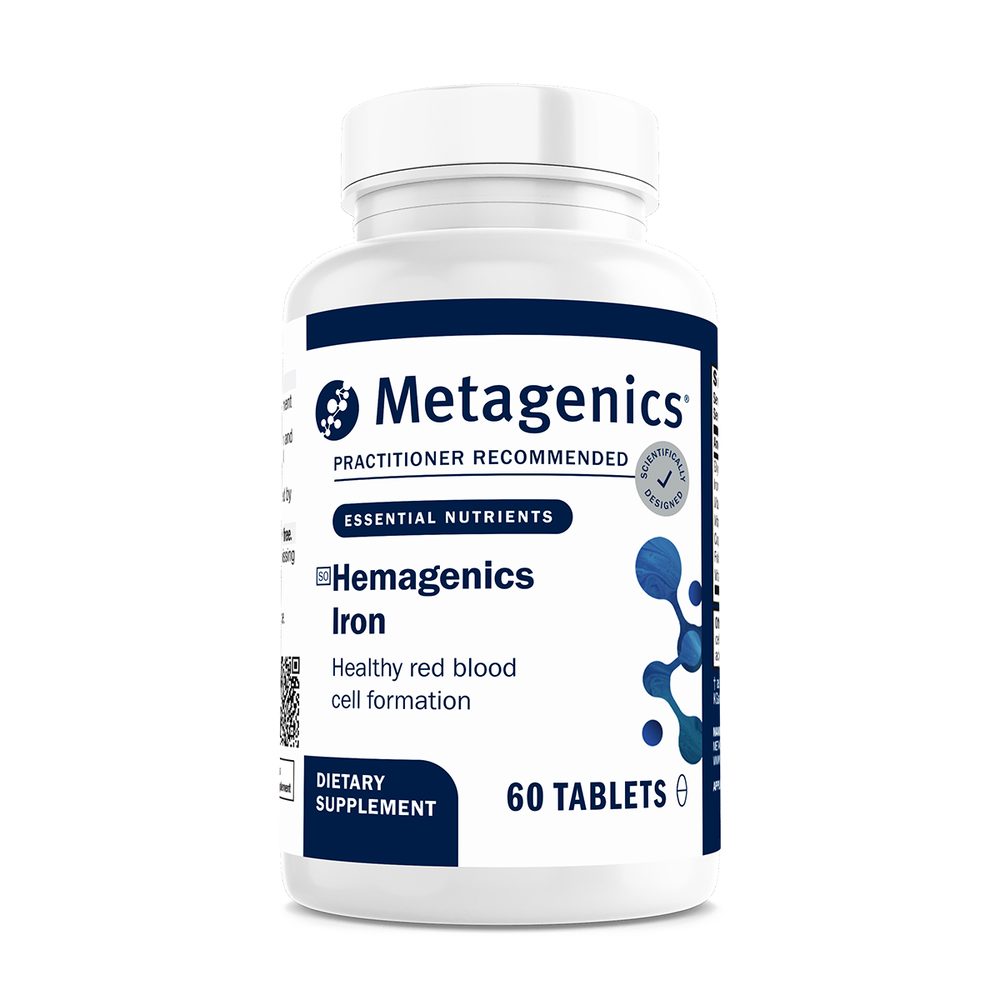
Hemagenics Iron
R425
Hemagenics Iron is a comprehensive supplement designed to support healthy red blood cell formation. It provides an excellent source of iron and other vital nutrients essential for red blood cell formation and maintenance.
1
Added to your cart.
Third-party tested
Non-GMO
GMP-certified facility
Description
Hemagenics Iron is a comprehensive supplement designed to support healthy red blood cell formation. It provides an excellent source of iron and other vital nutrients essential for red blood cell formation and maintenance. This product is non-GMO, gluten-free, and dairy-free.
Ingredients
- Glycine100 mg
- Iron (as Ferrous bis-glycinate)24 mg
- Vitamin B1 (as Thiamine mononitrate)5 mg
- Vitamin B6 (as Pyridoxal-5-phosphate)5 mg
- Copper (as Cupric gluconate)1 mg
- Folate (as Calcium-L-methylfolate)500 µg
- Vitamin B12 (as Methylcobalamin)100 µg
How to Use
Take one tablet daily, or as directed by your healthcare practitioner.